
The cybersecurity landscape in 2026 is nothing short of revolutionary. We're no longer just playing defense against known threats—we're in the midst of a high-stakes AI cyber arms race, where both attackers and defenders wield increasingly autonomous, intelligent systems. Quantum risks are shifting from "someday" to active roadmaps, while new attack surfaces explode from unmanaged AI agents and sprawling multicloud environments.
Drawing from the latest insights (Gartner, World Economic Forum, Google Cloud Security Forecast, and industry reports as of February 2026), here's a deep dive into the most cutting-edge technologies defining cybersecurity right now. These aren't incremental improvements—they're paradigm shifts that separate resilient organizations from the next headline breach.
1. Agentic AI & the Dawn of Autonomous Cyber Defense
The biggest story of 2026? Agentic AI—autonomous AI agents that don't just alert, but decide, hunt, and respond.
Attackers deploy agent swarms for reconnaissance, polymorphic malware generation, and chained exploits at machine speed. Defenders counter with "Agentic SOCs" (Security Operations Centers), where AI agents autonomously triage alerts, enrich investigations, orchestrate responses, and even perform proactive threat hunting.
Gartner calls out "Agentic AI Demands Cybersecurity Oversight" as trend #1, while Google Cloud's 2026 Forecast dubs it the "AI Arms Race" with defenders building AI-powered SOCs to match attacker velocity.


Modern SOC dashboards now pulse with real-time AI insights, turning overwhelmed analysts into strategic overseers.
2. Preemptive & Predictive Cybersecurity Platforms
Reactive detection is obsolete. 2026 platforms use AI to predict and neutralize threats before execution.
These systems analyze behavioral patterns, predict attack paths via graph-based modeling, and automatically block high-confidence risks. Combined with Continuous Threat Exposure Management (CTEM), organizations continuously scan, prioritize, and remediate the most exploitable gaps across their entire attack surface.
ABI Research and Pelco highlight this shift to "preemptive cybersecurity" as a top trend, with AI security platforms providing centralized governance over sprawling AI tool usage.
.webp)
Advanced dashboards visualize global threat flows and top risks in real time, empowering teams to act decisively.
3. Post-Quantum Cryptography in Active Deployment
Quantum computing isn't sci-fi anymore—Gartner warns asymmetric cryptography could become unsafe by 2030, so organizations are moving aggressively in 2026.
Enter post-quantum cryptography (PQC): NIST-standardized algorithms like CRYSTALS-Kyber and Dilithium are being hybridized with classical crypto. Crypto-agility frameworks allow seamless algorithm swaps without massive rewrites.
This isn't preparation—it's implementation: inventorying vulnerable keys, piloting PQC in TLS, VPNs, and code signing.

Visualizations of quantum threats show glowing keys and shattered encryption lattices, symbolizing the urgent transition.
4. Confidential Computing for Secure AI Workloads
AI models train on massive, sensitive datasets—often in untrusted clouds. Confidential computing changes that with hardware-enforced Trusted Execution Environments (TEEs) (e.g., Intel TDX, AMD SEV, AWS Nitro Enclaves).
Data stays encrypted even during processing, enabling secure multi-party computation, private inference, and federated learning without exposing raw data.
This technology is exploding for AI governance, protecting models from prompt injection, data exfiltration, and insider threats.

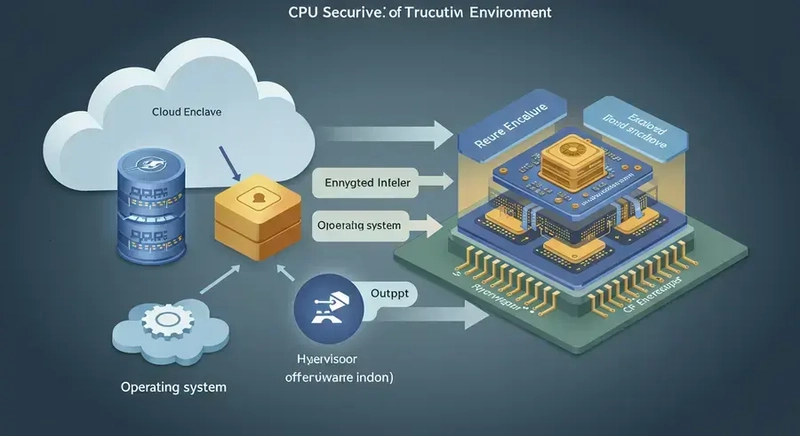
Diagrams illustrate isolated enclaves safeguarding data flows in cloud environments.
The Big Picture: Resilience Over Prevention
2026's mantra? Cyber resilience—assuming breach is inevitable, organizations prioritize rapid recovery, prioritized critical assets, and adaptive governance amid regulatory volatility.
The World Economic Forum's Global Cybersecurity Outlook 2026 stresses collaboration against AI-supercharged risks, while Deloitte frames it as "The AI Dilemma": secure AI while leveraging it for defense.
Organizations mastering agent oversight, preemptive AI, quantum readiness, and confidential computing aren't just surviving—they're leading in an era of permanent instability.
The future isn't about building higher walls; it's about creating intelligent, adaptive immune systems for the digital world.
Stay vigilant, stay ahead. The cyber arms race just got a lot faster.